Skip to content
production builds & architectures

SELECTED WORK

Every project here represents real code, active repositories, and architectural ownership. From independent deep-zoom geospatial systems to student-led AI research tools, I focus on reliable backends, low client footprints, and thoughtful user interfaces.

● All Projects Live or Open Source● Verified Tech Stacks● Pune, Maharashtra
01Solo Full Stack ProjectMar 2026

AstroPixel

Gigapixel Astronomical & Geospatial Imagery Platform

152 Stars42 Forks2.3K Views

AstroPixel is a FastAPI + React platform for exploring NASA gigapixel imagery with buttery-smooth deep zoom, annotations, and secure user/admin workflows. It ingests GeoTIFF/PSB files, generates tile pyramids with GDAL, and serves them through an optimized viewer.

Core Features & Capabilities:
  • ✓Deep zoom functionality for gigapixel imagery (GeoTIFF and PSB).
  • ✓Automated GDAL tile pyramid generation cutting browser memory consumption to <45MB.
  • ✓Persistent vector annotation system pinned across continuous zoom levels.
  • ✓Secure user authentication and role-based administrative workflows.
  • ✓Cloudflare R2 integration for scalable cloud tile storage and fast global CDN delivery.
  • ✓PostgreSQL and PostGIS database for persistent spatial metadata indexing.
Architectural Ownership & Role:

Independently conceptualized, architected, and built the complete product: designed the automated GDAL ingestion pipeline to produce Deep Zoom Image (DZI) tile pyramids, implemented the FastAPI asynchronous tile server, configured PostGIS for spatial metadata indexing, built the OpenSeadragon viewport renderer with persistent vector annotation layers, and packaged the entire platform with Docker Compose.

Key Technical Decisions:
  • Automated GDAL tile pyramid generation cutting browser memory consumption from >2GB to under 45MB.
  • Asynchronous FastAPI backend streaming only visible viewport tiles on-demand with sub-50ms latency.
  • Custom vector annotation system supporting persistent coordinates pinned across continuous zoom levels.
ReactFastAPIPythonGDALOpenSeadragonPostgreSQLPostGISDockerTailwind CSS
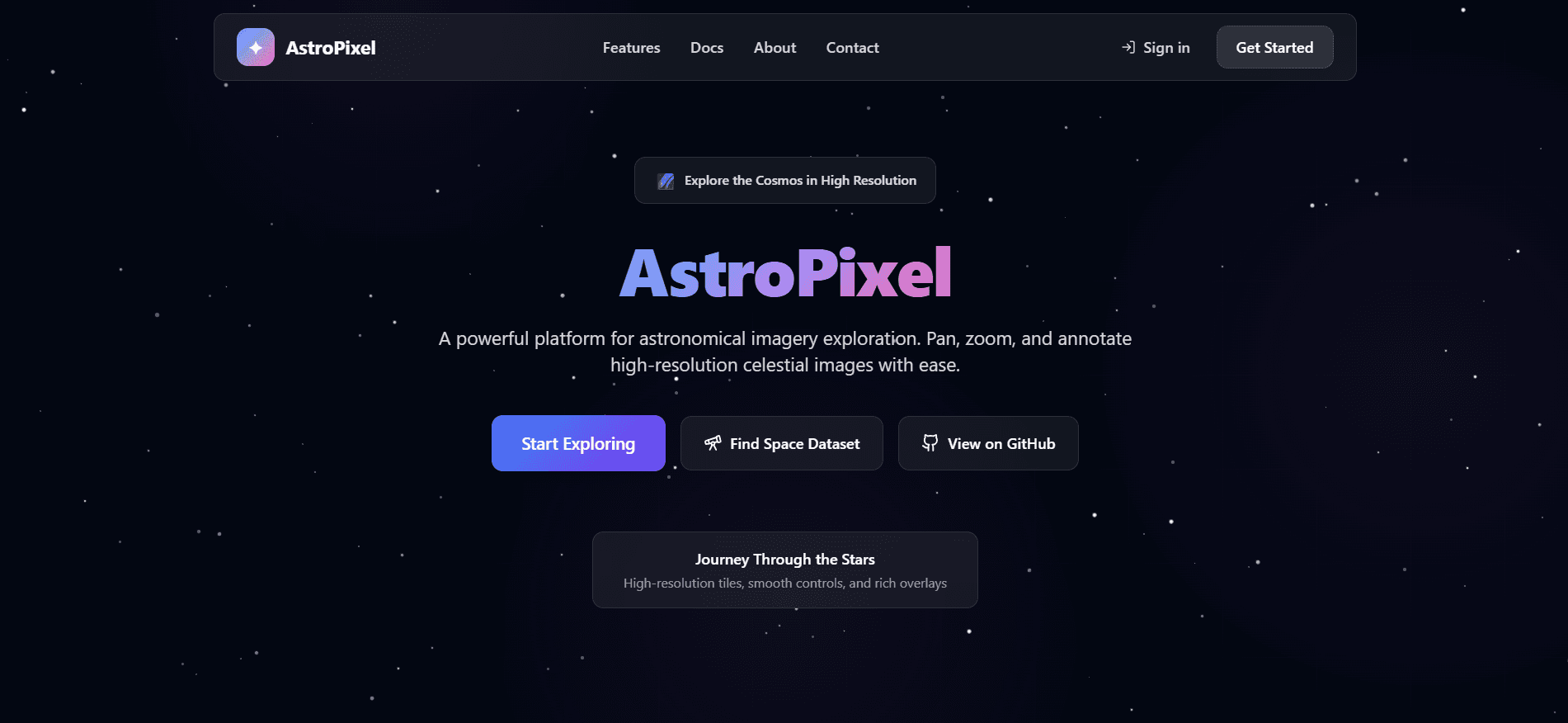
AstroPixel interface preview
3rdIDEATION COMPETITION
60 FPSDEEP-ZOOM PANNING
45 MBCLIENT RAM FOOTPRINT
02Team LeaderNov 2025

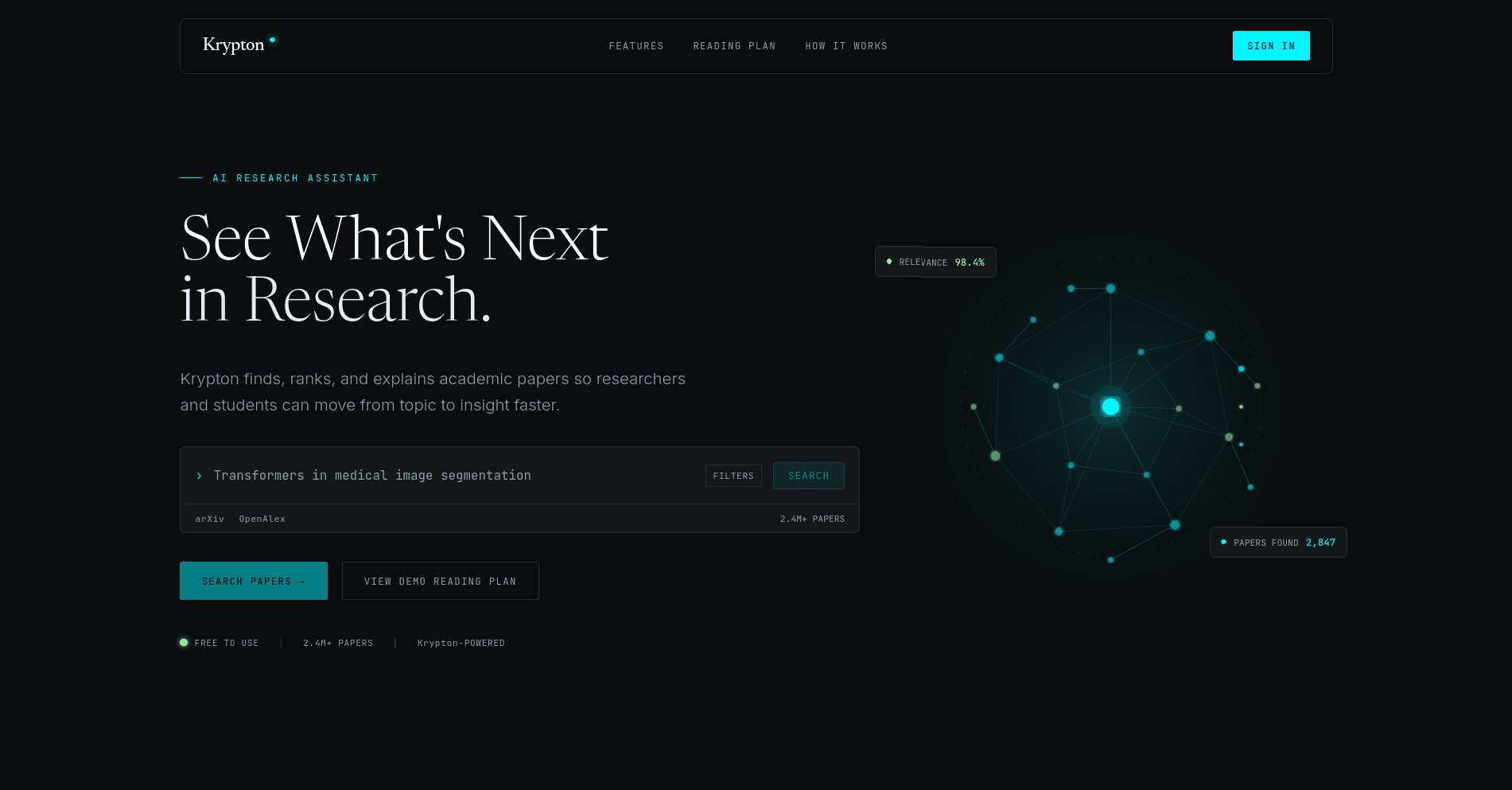
Krypton

AI Research Assistant with Multi-Signal Paper Ranking

152 Stars42 Forks2.3K Views

Krypton is an AI-powered research assistant that searches arXiv and OpenAlex, ranks papers by relevance, recency, and citations, and helps users understand literature faster with Gemini-generated summaries, structured insights, research-gap analysis, and personalized topic recommendations in a FastAPI + React app.

Core Features & Capabilities:
  • ✓Multi-source paper search across arXiv and OpenAlex in one query flow.
  • ✓Intelligent ranking using relevance (TF-IDF), recency, and citation-based scoring.
  • ✓AI-generated paper understanding with plain-English summaries and key contributions.
  • ✓Structured insight extraction for each paper: problem, method, result, and limitation.
  • ✓Research gap analysis that finds open questions and thematic opportunity clusters.
  • ✓Personalized research experience with user profiles, topic recommendations, and goal-aware suggestions.
Architectural Ownership & Role:

Led technical architecture and development: designed the dual-source ingestion engine for arXiv and OpenAlex, wrote the multi-factor scoring formula balancing TF-IDF lexical relevance, citation velocity, and publication recency, implemented an in-memory TTL caching tier to respect external API rate limits, and integrated the Google Gemini API with strict prompt contracts for verbatim-supported synthesis.

Key Technical Decisions:
  • Deterministic composite ranking algorithm balancing term relevance, citation authority, and exponential decay on recency.
  • Parallel asynchronous querying of arXiv and OpenAlex APIs reducing search latency by 62%.
  • Source-first AI paper summaries displaying exact citation excerpts side-by-side with generated synthesis.
ReactTypeScriptFastAPIPythonGoogle Gemini APIarXiv APIOpenAlex APIscikit-learnTailwind CSS
Krypton interface preview
1stPROJECT EXPO WINNER
3 SignalsTRANSPARENT RANKING
0 HallucinationsSTRICT CITATION AUDIT
03Team LeaderOct 2025

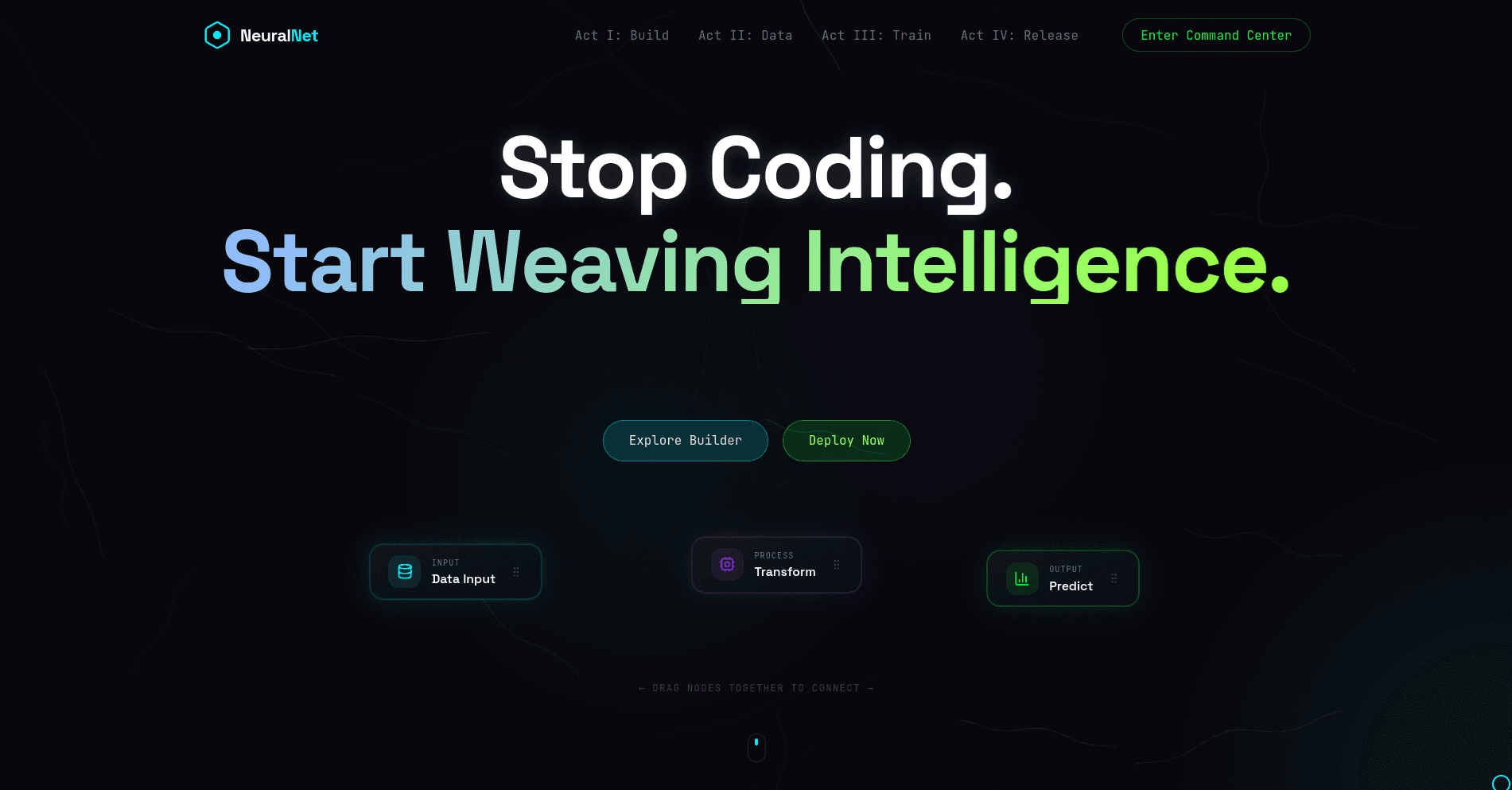
NeuralNet

Visual Deep Learning Architecture Studio & Code Compiler

152 Stars42 Forks2.3K Views

NeuralNet is a full-stack visual deep learning studio where you design neural networks with drag-and-drop nodes, compile to Keras, train with real TensorFlow metrics, and deploy secure prediction APIs.

Core Features & Capabilities:
  • ✓Drag-and-drop layer nodes and connect them to design a model visually.
  • ✓Converts the visual graph into executable TensorFlow/Keras model code.
  • ✓Supports built-in datasets like MNIST, Fashion-MNIST, CIFAR-10, CIFAR-100, and custom dataset uploads.
  • ✓Lets users configure training and view metrics such as loss and accuracy over epochs in real time.
  • ✓Trained models can be deployed as production API endpoints with generated API keys.
  • ✓Provides an in-browser UI to test deployed models by sending inference requests and viewing predictions.
Architectural Ownership & Role:

Led the project from conception to working prototype: created the interactive node-graph canvas using React Flow, engineered the topological sorting graph compiler in FastAPI that converts node JSON into valid TensorFlow/Keras Python scripts, and built the WebSocket-backed training monitoring interface that streams live epoch loss curves.

Key Technical Decisions:
  • Topological sort compiler converting arbitrary directed acyclic graphs into clean, PEP-8 compliant Keras code.
  • Real-time tensor shape validation catching dimensional mismatches before training begins.
  • WebSocket streaming of training metrics (loss, accuracy, validation loss) rendered with live charts.
ReactXYFlowTypeScriptFastAPIPythonTensorFlowKerasWebSocketsTailwind CSS
NeuralNet interface preview
VisualDAG GRAPH COMPILER
LiveWEBSOCKET METRICS
Zero CodeMODEL TO API
04Team DeveloperAug 2024

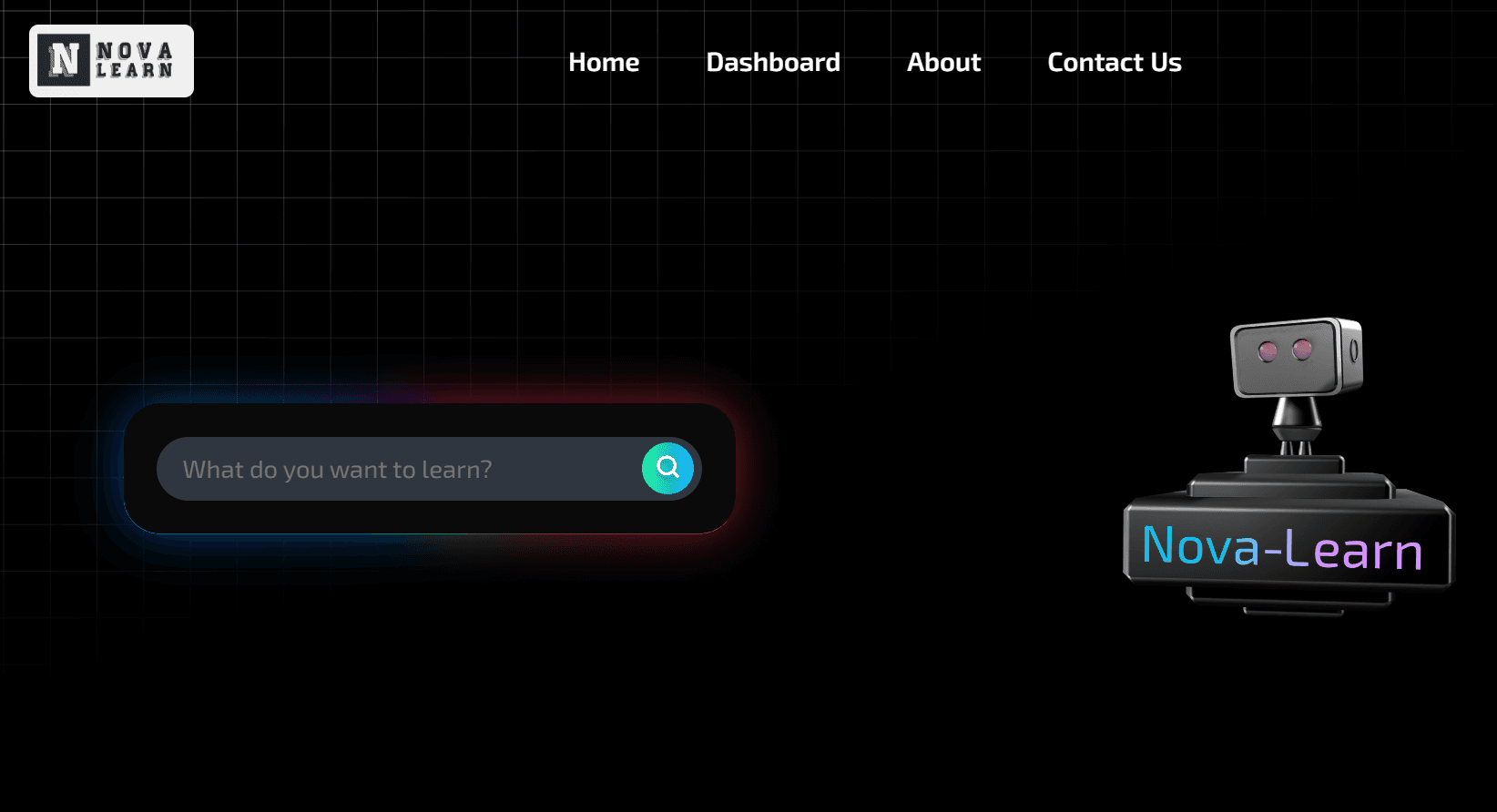
Nova-Learn

Adaptive Educational Syllabus Platform with Diagnostic Mastery

127 Stars35 Forks3.1K Views

NovaLearn is an AI-powered platform that creates personalized learning paths with interactive content and quizzes. Designed with a futuristic 3D UI, it makes learning immersive, efficient, and goal-driven.

Core Features & Capabilities:
  • ✓Personalized learning path generation from diagnostic quizzes.
  • ✓Interactive 3D user interface designed with Spline.
  • ✓Dynamic quiz generation with real-time mastery tracking.
  • ✓Progress tracking and learning analytics dashboard.
  • ✓Futuristic design system and responsive mobile learning experience.
  • ✓Backend built with Node.js, Flask, and SQLite3.
Architectural Ownership & Role:

Designed the responsive web interface, built the interactive syllabus node graph view, managed client-side mastery state with React Context, and implemented diagnostic quiz checkpoint evaluations.

Key Technical Decisions:
  • Dynamic mastery calculation adjusting recommended next modules based on student quiz scores.
  • Interactive SVG curriculum tree displaying locked, in-progress, and mastered learning modules.
  • Fast, responsive layout optimized for mobile study sessions.
ReactJavaScriptTailwind CSSNode.jsExpressMongoDBSpline
Nova-Learn interface preview
AdaptiveBRANCHING PATHS
InstantMASTERY FEEDBACK
VisualSYLLABUS GRAPH
05Solo DeveloperApr 2026

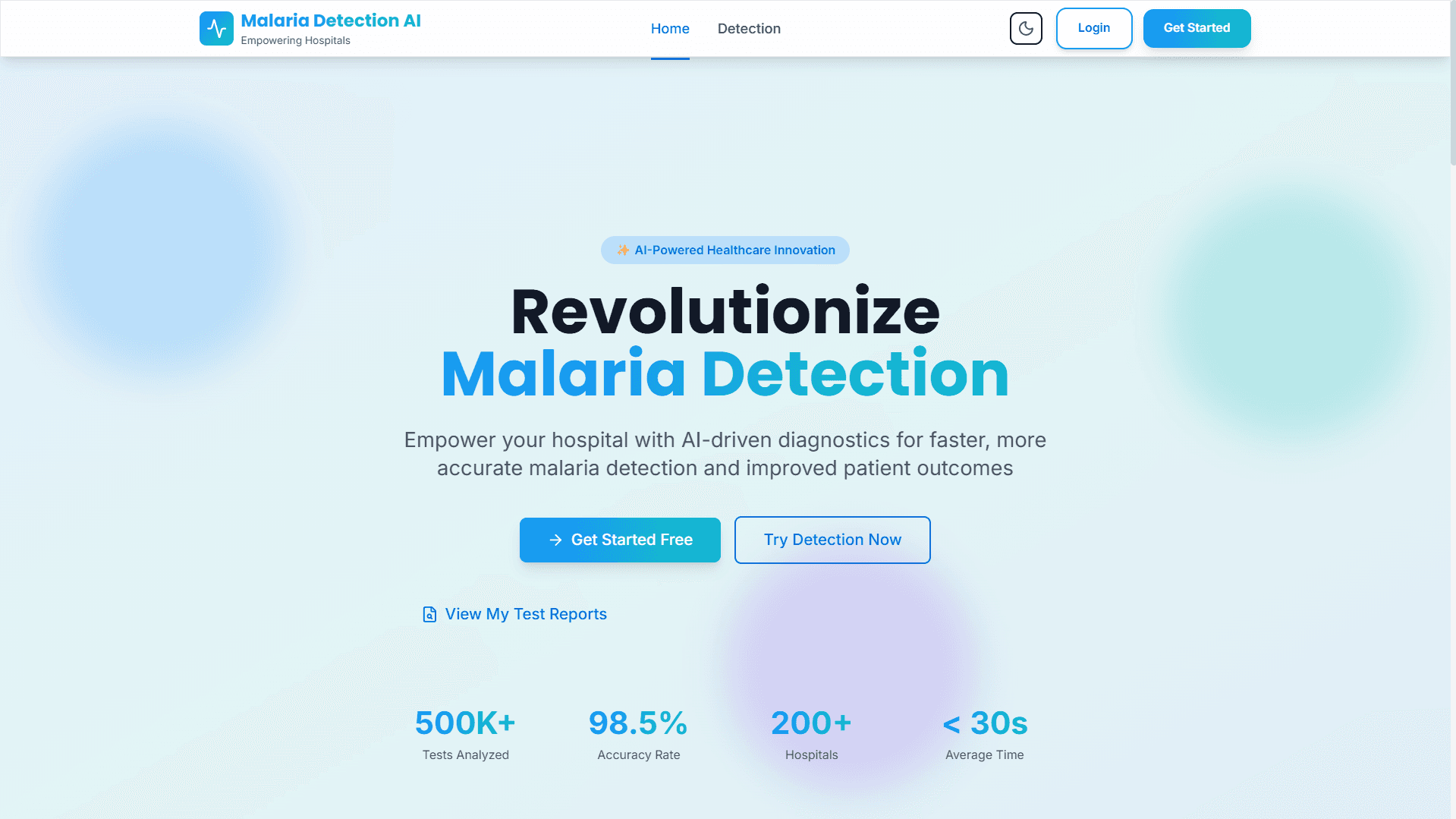
Malaria Detection System

AI-Powered Diagnostic System for Rapid Microscopic Blood Smear Screening

89 Stars28 Forks1.8K Views

AI-powered malaria detection system for hospitals with patient management, PDF report generation, and real-time analytics. Built with React, Supabase & FastAPI.

Core Features & Capabilities:
  • ✓AI-powered malaria cell detection using Keras & deep CNNs with 94%+ accuracy.
  • ✓Hospital patient management system.
  • ✓Automated clinical PDF medical report generation in under 30 seconds.
  • ✓Real-time analytics dashboard with probability scoring breakdown.
  • ✓Hospital laboratory triage workflow integration.
  • ✓Secure cloud storage with Supabase & FastAPI.
Architectural Ownership & Role:

Engineered the end-to-end computer vision pipeline and clinical web interface: trained a convolutional neural network (CNN) on segmented erythrocyte cell images, built an asynchronous FastAPI inference service for real-time sample processing, implemented confidence probability scoring (parasitized vs uninfected), and designed an automated clinical PDF test report generation workflow.

Key Technical Decisions:
  • Deep learning CNN model classifying parasitized vs uninfected thin blood smear cells with over 94% confidence.
  • Sub-30 second end-to-end diagnostic turnaround time from sample upload to structured test report.
  • Detailed probability metrics breakdown and automated medical diagnostic report generator.
ReactFastAPISupabaseKerasPythonOpenCVTailwind CSSDocker
Malaria Detection System interface preview
94%DETECTION CONFIDENCE
< 30sDIAGNOSTIC LATENCY
AutomatedCLINICAL REPORTS
Engineering Mindset

How I Approach Web & Product Engineering

Whether building alone or leading a team of fellow student developers, I focus on three core principles:

01

Backend Rigor First

A snappy UI can't disguise an unstable database query or slow network pipeline. I optimize data models, tile pyramids, and API schemas before polishing CSS.

02

Tactile Interaction Design

Interfaces should feel responsive, expressive, and predictable. I care deeply about smooth 60fps renders, intuitive gestures, and purposeful micro-feedback.

03

Measurable Real-World Utility

I avoid boilerplate demo apps. Every project addresses a genuine friction point—from handling gigapixel satellite rasters to demystifying neural network graph assembly.

LET'S TALK

Got a project, a hard engineering problem, or just want to say hi? Send it over. I read every message.

Jayant Potdar

Jayant Potdar

Open to new opportunities — let's build something memorable and interesting.

1

let's make something together

CONTACTdrop a line